This interview was published in the Road To Emmaus, and is reprinted here with permission of Michael and Teresa Wilson. This is the first of seven installments on their journey to the Orthodox faith.
In an engagingly open interview, Michael and Teresa Wilson of St. Mary of Egypt Serbian Orthodox Church in Kansas City, Missouri, talk about their decades as Rastafarians in America and Jamaica, their path to Orthodoxy, and the lessons they’ve learned along the way.
RTE: Michael, what was your background? Did you grow up Christian?
MICHAEL: In my family, we didn’t usually go to church, except perhaps on Easter. My mother and I prayed some and sang songs, but religion wasn’t a guiding force. She tells me now, though, that she knew I wanted a spiritual life, and where I ended up didn’t surprise her. Teresa grew up in a Catholic family, with seven brothers and sisters.
RTE: How did you become involved with Rastafari?
MICHAEL: For both Teresa and me, it began with Bob Marley and his music in the late ‘70’s. We were 18, 19 years old, and just married. One of the things that really attracted us was that Bob had this wild hair and dressed like a simple man, but in his lyrics he referred to the Bible, which blew our minds. I was from Manhattan, Kansas, and at the time I thought that people who read the Bible and went to church had to wear a suit and tie, had to look and act a certain way. I was even anti-church because of those images. It was a new awakening for me to realize that the Bible was for everyone, everyone in the world, not just the stuffy suit-and-tie people I’d known.
So here comes Bob Marley, with his guitar, his dreadlocks, and smoking herb (marijuana), and it all attracted me. He was a person who was there for the poor, the elderly, the kids, and most of all, he was talking about God.
At the time it seemed that he was actually reaching us middle and upperclass white Americans more than black Americans. The people he tried to sing for shunned him.
RTE: Why?
MICHAEL: Because he looked poor and low class. Some black Americans were looking towards education as a way to improve things, but in our neighborhood most black people were reaching for the gold chains and fancy cars as a way to feel they’d made it. Then came Bob out of the Jamaican ghetto saying,
“You don’t need all that. Love your brother, give yourself to God, live simple.”
That wasn’t something they wanted to hear. At the time, Teresa and I were trying to break the cycle we’d grown up in – “me first, out of my way.” So, he gave us an image to look up to, and little sayings and words of songs that I later figured out were from the Bible.
We knew some of the first reggae artists that came after Bob Marley. You’d go to their hotel room – they’d have been put up in some fancy hotel by the concert promoters – but the TV would be shoved off into the closet and the Bible out on the table. You wouldn’t see any beer cans, but you’d see food spread out for everyone that came: greens, potatoes, tonic health drinks the Rastas make from roots… The essential part of their group was the cook, not a guy to go find the girls or the drugs after the concert.
RTE: Why a cook?
MICHAEL: They were pure vegetarians with a little fish and they relied on their diet. Coming from Jamaica to America they didn’t want anything to do with our fancy fast foods. They came with big boxes of food from home to cook their own.
RTE: Did you know Bob Marley?
MICHAEL: No, we didn’t know him, but we saw him once when he played in Lawrence, Kansas. It was one of the most amazing nights of my life. There was a time during the show when he was a definite rock star, but there was also a time when something higher came over him. He talked about those times and said that he himself didn’t know what it was. At the time I said,
So, we started copying our lifestyle from his… things we’d read in Rolling Stone magazine, stories we’d hear about him. At the time it was what we longed for, something to hang on to.
RTE: How did it affect your lifestyle?
MICHAEL: It changed it immensely.
The next big reggae artist we met was Peter Tosh. He was part of the original Wailers: Bob Marley, Peter Tosh and Bunny Wailer, who afterwards went on to separate careers. One year Peter Tosh stayed at the same hotel my wife and I were at. He was the first Rasta I actually reasoned with. After the show, we sat into the night talking about spiritual things. Peter showed me parts of the Bible that explained the things that were happening – “wars and rumors of wars.” He was the first Rasta we’d met where we could see the practice going on. To me, it was about simplifying the world. We Americans were raised to be the best at everything, but Bob and Peter showed us that you didn’t always have to be the best, that sometimes being the least was actually the best.
 |
| St. Elesbaan, King of Ethiopia (orthodox icon from here) |
In fact, that night it was crazy because lots of people came to see Peter. I remember being in his room, and everything getting real confused, people milling around, when all of a sudden he jumps out of his chair and says real loud, “Everybody out!” He was a big guy, so everybody heads for the door, me included, but he grabs me by the shoulder and says, “Except you!” So, everyone else left, he sat me down, and we reasoned for hours. After that night I quit smoking cigarettes, I quit doing drugs, I quit lusting. It was the first time I’d met someone who cared about me for just being me.
RTE: The impression of an outsider is that Rastas are rather relaxed about life: they sing about peace, smoke marijuana, and have a few girlfriends. But you are saying that there was an attempt at a purer practice among those who were serious.
MICHAEL: Among the serious, yes. As with any movement, at first it was a vehicle for good, but later it became a vehicle for anyone from Jamaica who grew their dreads and played music… Not to take anything away from the later reggae artists, but we came to find out that Bob, Peter, and the early Rastas were some of the last from whom you could learn about real Rasta.
The others were rude boys…. hustlers, music-type people like anywhere. To find the real Rasta, even in Jamaica, you went to the hills, to the mountains. You’d meet ten people to get to the one real guy who worked all day in the fields, took care of his kids, didn’t go to town, didn’t go to reggae shows – he was just living. So when you met some of the elders of Rastafari, they’d tell you that Rastafari wasn’t a religion, but a way of life. That was what we were looking for, a way of life. Religion seemed like a corporation.
Of course, the bigger the Rasta movement got, the more temptation there was to get away from the principles. The people who lived in the mountains were the ones really following the simple lifestyle, but this was also because they were really poor. When Jamaican Rastas get out into the world, they are like the rest of us. Unless you watch yourself, it’s easy to get trapped into wanting this and that.
RTE: Teresa, how did the Rasta movement fit for you?
TERESA: I wasn’t as into the music. What I liked was that they lived a simple life, that they lived “Ital”1 – no white flour, no white sugar, no pop, nothing processed, no meat. That was something I wanted also; I didn’t want to eat anything that wasn’t directly from the land (although I must admit that I had a sweet-tooth). Also, to be honest, we were both heavy herb smokers, and with the Rastas we could smoke as much as we wanted. I also liked the idea that we are all created equal. Mike and I both had black and Mexican friends at school and we didn’t fit with the white-only crowds. We didn’t want to go to college and do the career thing, and I didn’t want to contribute to the image of a successful young white American woman. I wasfine with being a service worker.
Mike was the one that was into the music. I just loved Mike. My feeling was,
“Whatever you want to do, let’s do that – just let me have my garden.”
I was happy having a job and friends. I never wanted to be anything. I just wanted to be nice to people, to grow our food, and to praise God in my own inner way.
Whatever Mike is into he researches to the nth degree, but I’m not like that. I wait for things to come to me. While he was reading Rasta, I was reading other things like the Baghavad Gita, the writings of the Catholic priest Henri Nouwen, books on Zen Buddhism, whatever came my way. I was having a very hard time with the concepts of war, suffering, racism, class distinctions, and these books helped me. At the time I thought,
“Maybe I’m Rasta, maybe I’m not.”
Rasta did give me a sense of womanhood though. On our first trip to Jamaica, I saw a woman with a long dress and with her hair covered, and I thought,
“Now that’s beautiful. That’s me. That’s the image I want to have. I want to be seen as a roots woman: natural, loving, kind, compassionate, spiritual.”
So, although we were married, lived together, and loved each other, we also had our own spiritual identities. Michael is loving and our relationship has always allowed for individuality.
RTE: How did you maintain your lifestyle?
TERESA: We’ve tried to keep things simple by eating healthy, buying our clothes and things second-hand, growing as much of our own food as possible, learning how to self-medicate with herbs instead of prescription drugs, not having anything we can’t buy with cash…nothing on credit cards. Besides the garden and raising our son, I’ve had general service jobs like being a produce stocker at the local grocery store, a field worker picking vegetables and flowers, and at one time I produced tofu, a staple food for vegetarians. Now, I’m a home health aide.
RTE: And you Michael?
MICHAEL: I work at an old theatre called Liberty Hall in Lawrence, Kansas. When it was built, it was one of only two theatres in a four-state area, and played W.C. Fields, Buster Keaton, Laurel and Hardy. We still do movies, but now we also have live shows. We have a little theatre with 300 seats, and a big theatre with 700, and feature everything from classical music to Bob Marley’s kids. I’ve worked there for seventeen years as the janitor. I take care of the building.
RTE: When you began, how did the Rasta movement break down ethnically?
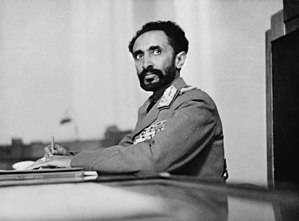
MICHAEL: It was very small and, here in the U.S., about 90 percent white. In Jamaica it was almost all black, with only a few whites. Rasta wasn’t organized, although there were some independent elders and a few different factions: “The Twelve Tribes of Israel,” who were mostly professionals (doctors, lawyers, teachers, and their children); the “Ethiopian World Federation,” which includes some of the older people from the Garvey era who were still in communication with Ethiopia; and the “Nyabinghi” Rasta, who were more militant. They had ceremonies that lasted up to a week, revolving around certain Ethiopian holidays, or His Majesty Haile Selassie’s life.
They would drum and sing what I’ve come to understand were old Christian spirituals, songs that they’d learned in church when they were young. They would take the word “God” out, and replace it with “Rastafari” or “Jah,” from Jehovah. But we weren’t aware of those origins in the early days; to us they wrote those songs.
The Rastafari Movement
RTE: So, what is Rastafari, and how did it begin?
MICHAEL: In my understanding, Rastafari is an Ethiopian word – Ras means “head, chief, or king”; tafari means “Creator” or “the One to be feared.” Ras Tafari was His Majesty Haile Selassie’s name before he became the emperor of Ethiopia. The word “dread” means “God-fearer,” so people who were serious about the practice grew their hair into dreadlocks (letting long locks of hair just naturally grow together) as a sign of reverence for God. Later, it became more of a fashion, like a badge. The movement began in 1928, when the British were still in Jamaica.
Some people say it was sparked by Marcus Garvey, others say by Leonard Howell. Both were Jamaican preachers: Garvey preached a “Back to Africa” movement, and Howell was the first to proclaim His Majesty as the Messiah. They were revivalists, and encouraged people to reclaim their African roots.
In 1930, when Haile Selassie was crowned the
“Emperor of Ethiopia, King of Kings, Conquering Lion of the Tribe of Judah,”
it was flashed around the world. Diplomats and leaders from many nations came to his coronation.
Finally, there was a great African king. So, you can imagine that for a simple Jamaican whose ancestors were slaves, seeing pictures of this
African man being crowned and the European powers going there to acknowledge him was a huge thing. Marcus Garvey had said that the day of redemption, the day when black people would begin to regain their humanity, would be at hand when you saw a black man crowned. So, the black Jamaicans were ready.
The coronation was on the front page of all the Jamaican papers. I’ve seen a copy of it, and this was when the movement really began. A lot of people took on “Ethiopianism,” – wearing the red, gold, and green of Ethiopia’s national colors. Interestingly, the dreadlocks really had nothing to do with His Majesty.
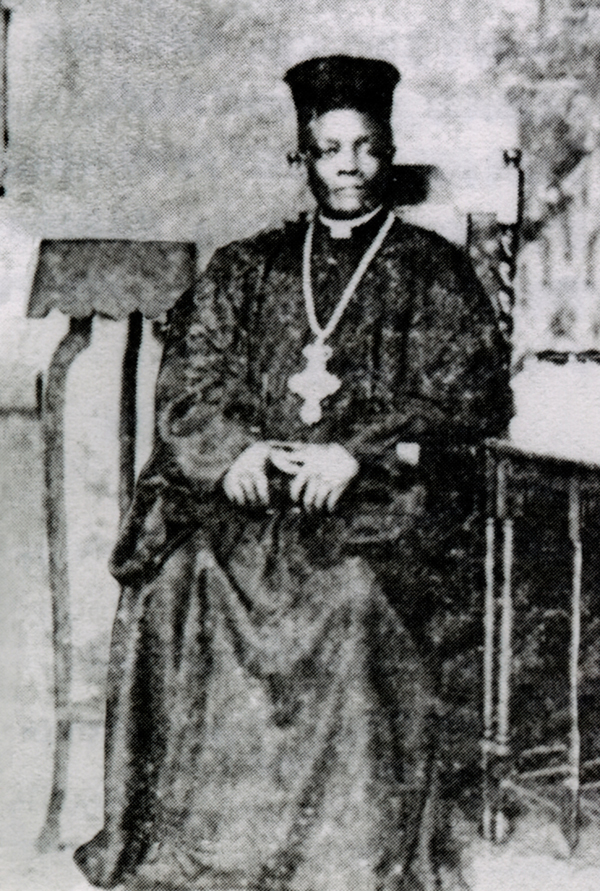
Dreadlocks were first introduced to Jamaica from a National Geographic photo of an Ethiopian Coptic monk with dreads who had come from his monastery down to the city to preach the Gospel. So, in 1930’s Jamaica, when people saw this picture of a monk with his Bible, his staff, and his dreadlocks, they began doing the same things that we came to as Rastas in the ‘70’s – growing their dreads, reading their Bibles. They could see there was something real in these pictures and they tried to reach it by copying what they saw, just as I did fifty years later.
Another thing about the coronation of His Majesty was that National Geographic covered it2, and these were the first color pictures that were ever used in the magazine. In Jamaica, almost every Rasta family I met had that issue of the National Geographic somewhere in their house.
These first Rastas became their own entity in the midst of a British colony, just as we American youth, years later, looked for something more in our own society. It was wild how that happened. Once my wife and I became Rasta, we went on like that for years, just trying to live a really simple life in America, me as a janitor and Teresa as a maid, agricultural worker, and later as a nurse’s aide.
RTE: And you did this out of choice.
MICHAEL: Yes, it was our choice. More money was the last thing we wanted. We were trying to get closer to God, so we dreaded our hair and took on the images we saw of Rastas, even though we’d hear things like,
“You’re white, you can’t be Rasta,” or “You’re Americans, you shouldn’t do this.”
The Jim Jones tragedy had already happened in Guyana, so the cult thing and the marijuana were always held over our head. We didn’t hide anything, even the smoking, because we felt so real about it. For Rastas, smoking was a kind of ceremony, and they sometimes even called it a “sacrament.” Serious Rastas didn’t just smoke for recreation; it was something more. They would say that when you smoked you all came to the same level, the social differences were broken down. And, of course, it represented the opposite of alcohol.
RTE: How was that? To most of us, the two seem to go together.
MICHAEL: The way we saw it, alcohol was Babylon, the world. Alcohol paid taxes to the government, the government ran the whole thing. But the marijuana, we ran. No taxes, it was our thing. “They” didn’t have anything to do with it, and in fact “they” said it was wrong, that you could go to jail for it, and that you’d have deformed babies. But there weren’t deformed babies from marijuana, so we saw them lying. Then, when we looked to the Bible, it said,
“Every herb-bearing seed is good for the use of man.”
So, we believed we had the Bible to back us up. It was against Babylon, it fit the whole life-style.
RTE: Were most of the people you knew in Jamaica Rastas?
MICHAEL: Not really. Perhaps only in the way that you would say that most people here are Christian. If you ask eight out of ten people here in Kansas City, they will probably say,
But do they practice being Christian, do they think about what it means to be Christian? In Jamaica, maybe somewhere around 80 percent would say that they are Rasta. It was a youth movement. Among the older Jamaicans, there was more of the Christianity that we knew growing up, the British style of dressing and attending established churches. If their son became Rasta their reaction was often like it was here, that it was a bad thing. They were afraid that he’d become a bum.
Encountering Orthodoxy
RTE: What finally brought you to Orthodoxy?
MICHAEL: All through my Rasta years, my reason for being there was to get closer to God. I think it was just God working with me through the Rasta movement. As I said earlier, in everything you read about His Majesty, in every speech, every proclamation, he talked about the Church, the Gospels, the saints, and especially about Jesus Christ, but I didn’t focus on those things.
The first Orthodox encounter I had was at the reggae fest here in Kansas City ten years ago. I always had a booth at the festival, and one year there was a man walking around in a long black robe. He was handing out a pamphlet that simply asked,
“Do you know what His Imperial Majesty’s faith was?”
There were a few lines underneath, and an Ethiopian monk on the front with a cross. The man in the black robe turned out to be Fr. Paisius, who was Orthodox and doing outreach at the festival. He was interested in Rastafari, and we began talking about books. We both knew about a rare set of books in four volumes called, “The Lives of the Ethiopian Saints.” I’d been keeping an eye out for them for years, and had managed to get Volumes I and III. Fr. Paisius, as it turned out, had Volumes II and IV! So, we got together to swap books. I actually walked through these very doors ten years ago. I was floored.
RTE: How so?
MICHAEL: To be honest, that first day all I wanted to do was get the hell out of here. I felt I had found what I needed, and I wasn’t ready for it. It was like,
“Oh my gosh, this is what you’ve always wanted, and it’s too real.”
Fr. Paisius and I got together a couple of times to swap books, and talk briefly. The next year he came back to the reggae fest, we talked some more, and he invited me to church. Usually, that was the last thing I would have done, but I came that Sunday because I always stayed the festival weekend in Kansas City. I came in the middle of the service, and felt like I was home. I didn’t know what I was feeling, I just knew that it was right and that it was what I’d been looking for my whole life. I still remember that day.
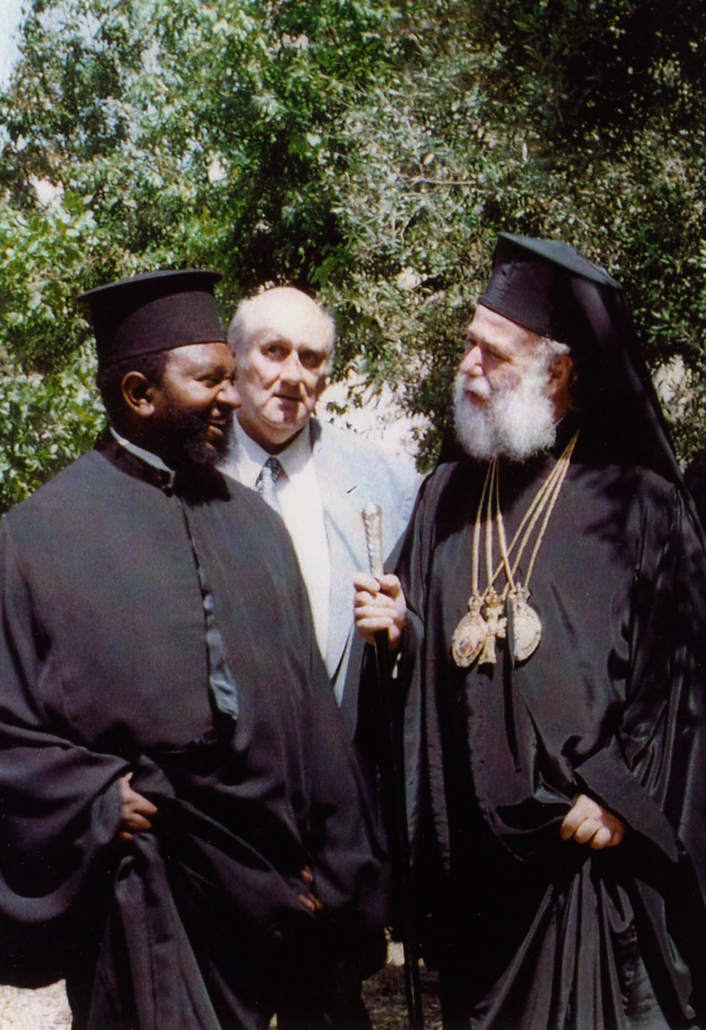
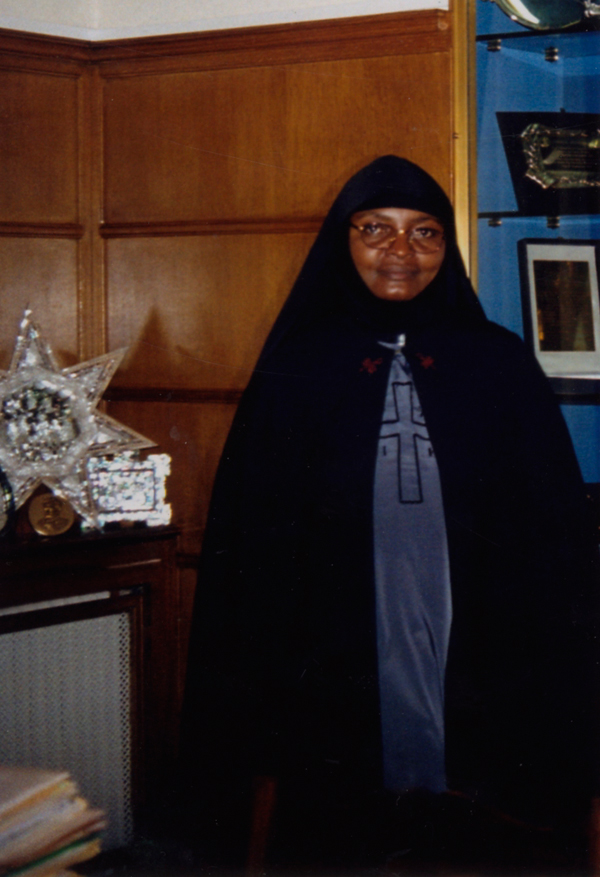
Then it became a thing of books – I’d read one, and Fr. Paisius would hand me the next. I had the radio show at the time, so I was up here a lot, and two of the women at St. Mary’s who had become Orthodox, Mari and Magdalena, were taking care of the bookstore. I’d come every day and we’d hang out pretty tough. We spent a lot of time together. Mari (now Mother Pachomia) became an Orthodox nun. I’m really grateful to all the Orthodox folks in Kansas City who helped me get there: the parishioners of St. Mary’s, especially Magdalena, and the nuns, Mother Pachomia and Mother Brigid, who gave me somewhere to be.
In the beginning, Fr. Paisius gave me Not of This World, the biography of Fr. Seraphim Rose, but after a few chapters I brought it back and said,
“No, this isn’t for me. It’s not clicking.”
So, he gave me The Way of a Pilgrim, and it lit something inside of me. I began doing the Jesus Prayer.
After The Way of a Pilgrim, I totally got into St. Theophan the Recluse [click here]– Path to Salvation, Unseen Warfare. The book that really touched me was the letters he wrote to nuns, Kindling the Divine Spark.
 |
| St. Theophan the Recluse (from here) |
I’ve read it so many times that it’s really the way my Bible should look, completely worn out.
Later, I got back to Not of This World, and liked it. Other Orthodox writings have also really helped: St. John Chrysostom’s writings on marriage, writings of St. Nikolai Velimirovich, the Optina Elders series, some things from the African and Ethiopian traditions such as Matthew the Poor, and Fr. Bishoy Kamel on the Lord’s Cross. This past year St. Isaac the Syrian’s Ascetical Homilies came to me. I’m grateful for all of these.
RTE: How was this time for you, Teresa?
TERESA: Before Michael met Orthodoxy, we’d had a real happy life, but after he started reading, he just didn’t seem happy. He wasn’t sure of himself anymore. I reminded him,
“This is what I left fifteen years ago.”
That is, I’d more or less stopped going to church, but in my heart of hearts I knew who Christ was, while Mike had never really been Christian. But now I was irritated that he was being taken from me. I’d had Jesus from childhood, we had gone to premarital classes and been married in the Catholic Church, but
now he was being led to Jesus Christ through what I saw as these freaky Orthodox nuts and I didn’t appreciate that at all. Who did they think they were, intruding on our happy marriage, our beautiful little family, our “simple” lifestyle?
For a long time our marriage had been very solid and we were very proud of it, but when he began going to church and learning about Orthodoxy, it was shaken to the core. The first time Fr. Paisius came up to us at the reggae fest, I took one look at him and understood that everything was up. I felt like screaming, and I prayed to the universe,
“Keep that man away from my husband!”
Fr. Paisius still remembers the meeting. He came strolling across the lawn because we had a book table and Michael was burning Ethiopian church incense.
When Mike started becoming Orthodox, I said,
“That’s it. I’m not doing what you do for my whole life. We can still be married, but I’m doing something else.”
He said,
“That’s fine. As long as you love me, it’s alright.”
But inside I was scared, seriously scared. I was afraid I was losing the man I’d loved, borne a child with, and built my life around for the past fifteen years. I was right, too. I did lose that man, and now I have a new man. He’s the same, but different. Not better, just different.
More On Orthodoxy
RTE: Probably every married woman reading this can feel what you went through, Teresa. When were you finally baptized, Michael?
MICHAEL: About six years after I met Fr. Paisius. I was working towards baptism, going to classes along with our son Nesta, who was to be baptized with me. As I said earlier, we’d been doing this Rasta Revival Campout, with people attending from all over America. One year we had twelve different countries represented at the revival, topping off at 130 people. It was mostly Rasta, and even some pagan people who were sympathetic to Rasta, or thought Rasta was something it wasn’t. We sent fliers out, and after that people came by word of mouth.
As I became more attracted to Orthodoxy and it came time for my baptism, Fr. Paisius and I decided to have the baptism at the Rasta Revival Campout. There was a lake there and it was a good setting. I hate to say it, but some saw me as a leader in the Rasta movement in this area, and I thought that a public baptism would be a good way to show the group where I was going and how much this meant to me; to share it with them.
RTE: Your reasoning wasn’t so different from Orthodox missions centuries ago in Europe, Siberia, China, where, if the headman was baptized, everyone else followed. You were the head of your own little community.
MICHAEL: Yes, maybe to some, but about a week before the campout, something happened that meant we had to delay it for awhile. I was totally psyched, I really wanted to be baptized and was ready, but it just couldn’t happen. Now I believe this was God’s will. I went through a long period of reflection, and thoughts came up like,
“Maybe God doesn’t want me baptized …maybe this, maybe that. What do I tell these people who I primed up for the baptism, and who now want to know what happened?”
But, over that year I became so strong and so ready, that in the end it was even more powerful.
The only thing I worried about was our son. He was fourteen, and didn’t understand why we’d had to put it off. We’ve raised him pretty free, not telling him what to do. Of course, we made suggestions in a parental way, about what we felt was right, and tried to teach by our example.
We home-schooled him, and, in a way, let him direct his little life under our protection. Although I had my own questions during that time, I kind of let him be. Finally, when the baptism could happen again, we decided to do it on Theophany.
Before Christmas, I took Nesta aside and said,
“I’m going to get baptized on Theophany, and it’s up to you if you want to.”
He instantly said,
I said,
“What, Nesta? What’s your condition?”
He said,
“Only if Fr. Paisius is doing it.”
So, I called Fr. Paisius and he said,
When it happened, it was a very powerful thing. My next-door neighbor came, Teresa’s sister came, and Teresa’s favorite aunt, who came to witness Nesta’s baptism because she had promised Teresa’s mother that she would see that the grandchildren were baptized. Teresa, of course, had been baptized as a baby. When we were baptized Orthodox she came with us to church from time to time but wasn’t ready to come in herself. It was a huge change for her because I had been so deeply Rasta. Our whole married life had been built around Rastafari, and now I was changing.
 |
| Orthodox saints from Africa (click here) |
RTE: Teresa, how did you feel about Nesta coming to Orthodoxy?
TERESA: I was really glad to see him baptized. It was something I’d wanted for him, and it happened when he was fourteen. It was his own decision, and marked the boundaries between childhood and adulthood. He’s a good boy, really beautiful. It didn’t change our relationship. My mother, who had already died, wanted all of her grandchildren baptized, and this fulfilled her dream.
As Michael said, we home-schooled Nesta, structuring his schooling around what he was interested in. When it was dinosaurs, we’d do math and reading around dinosaurs, we’d do everything around dinosaurs. We raised him with the idea that children are born knowing what they need to learn. Our job as parents is to give them the tools they already sense they will need as adults. We would say,
“Nesta, you know what you need. We’re trusting you. You need us to be your guides, but you know what you’ll need as an adult.”
I was trusting the universe to lead us both. Every year I’d ask,
“Are you ready to go to school this year?”
Finally, he did go in the sixth grade and then on through high school. He didn’t do very well grade-wise, but I didn’t care about that. He knows how to work, and he’s got confidence and family warmth behind him. He can do anything he wants.
MICHAEL: Teresa was finally chrismated Orthodox on Palm Sunday in 2005, and in August, on our 25th wedding anniversary, we had our marriage blessed in the Orthodox Church. The day our marriage was blessed was beautiful. Besides the service, which was very powerful for both of us, it meant a lot that my parents and most of Teresa’s large family were there. They stayed through the marriage service and the liturgy, a long haul for non-Orthodox folks. Friends from the church made the food.
RTE: Wonderful. Teresa, has your outlook changed since you’ve become Orthodox?
TERESA: One thing that I felt from all of my reading was that every religion has the same basic principles of loving God, of being kind to others, living simply, being at peace. I was looking for a way to apply these principles, and I thought,
“Well, you know, here I am in this marriage forever and ever, I’m not going to leave, so let’s apply it here. Let’s apply what I’ve learned in this church.”
Some of the things I’d been reading said that sin is an illusion, and many Orthodox elders express that same principle – not that it doesn’t happen, but that it isn’t what’s eternal. The thing that changed for me when
I became Orthodox was that Jesus Christ as God became real. Zen Buddhism didn’t have that, nor did Rasta, Bahai, or Hare Krishna. I also liked the structure of Orthodoxy. I’d always wanted to fast, and I’d always wanted to have a rule of prayer, but I didn’t have the discipline.
Now, I have help. Michael encourages me to pray with him every morning and before sleep, and fasting isn’t difficult. I actually like being hungry and the feeling of being empty. I guess I needed a solid reason to do it. But I have to say that even after I was chrismated, being Orthodox was uncomfortable for a long time. I’d quit every other day, and then decide to try again.
RTE: What didn’t sit right?
TERESA: I realized that I had been chrismated not because I really wanted to be Orthodox, but because I loved Michael. Now, I was struggling with my own identity, and was tired of arguing with Michael over ideas about faith, such as my reading A Course in Miracles, which I had loved. I was feeling a void. One day, another home health-care giver, a born-again Christian, stuck her head around the corner of the room I was working in. With tears in her eyes (she had recently reluctantly divorced), she looked at me in the mirror and said,
“If you love your husband as much as you say you do, I’d join his church. You have a good marriage, a good husband. Don’t disrespect this gift that God has given you.”
Well, that statement sank deep into my heart, into my bones, into my blood, and I cried a steady stream of tears. I realized then that I was fighting against God, and that I was losing the battle, the battle of my will, my way.
I don’t like to lose, I don’t like learning to be humble, I don’t like admitting my sinfulness. I had this grand idea that “I am a good person, I am not a sinner!”
But in Orthodoxy, losing is gaining. Losing my way, losing my will, admitting my sinfulness is gaining His good grace, gaining “unexpected joy.” It’s not about winning anything.
RTE: I think you’ve just expressed the whole essence of spiritual life. Was there anything you read that helped you along the way?
TERESA: Yes. The first was Touching Heaven, about a young man’s pilgrimage to Valaam, then: The Royal Way of the Cross Leading to Eternal Life; Orthodox Prayer Life; Communion of Love; St. Basil, The Wonderworker of Ostrog; St. Silouan the Athonite, Shepherd of Souls… also, many of the non-Orthodox spiritual books I read contributed to the way I perceive Orthodoxy. I bring all of that experience with me to what I am today. Most recently I read The Joy of Full Surrender. I happened on it in a used bookstore and it’s been very uplifting, especially during Lent.
What I see now is that in Orthodoxy you can be who you are. You can pray morning, noon, and night or you can lead a life in the world and come to church as you can. It’s not even about what you want – it’s about what Christ wants for you. You just need to let that happen. You don’t have to change yourself, you let God change you. This is what’s freeing about Orthodoxy. I don’t have to change, I just have to be. God will change me if and when He wants to, the way He wants to. Now, I’m at peace with that.
St. Basil of Ostrog
RTE: I understand that both of you have a strong tie to St. Basil of Ostrog. He isn’t well- known in the West, so how did that come about?
MICHAEL: A couple of years ago I received a flyer about a book about him called, The Mystery of the Wonder-worker of Ostrog. The picture on the flyer drew me to him, and although we didn’t get the book at the time, the picture kept surfacing, and I found myself saying,
“Holy St. Basil, Wonder-Worker of Ostrog, pray to God for us!”
A year later I saw the book at St. Mary’s, and I thought,
He was looking so holy and kind, blessing us from the picture, that I picked up the book and looked through it. A few weeks later Teresa and I stayed overnight at the church and I brought it to our room to read. Shortly into it, the first story mentioned Bob Marley, and I thought,
“Now this is amazing – all the way in Serbia, Ol’ Bob is moving people!”
I took the book home to read, and came home the next day to find Teresa so into it that she couldn’t put it down. She read it nonstop for a few days, and I tiptoed around to let her be. I felt St. Basil reaching out to her like he’d already reached to me. Not long after we’d read the book, I dreamt that St. Basil was with us. I felt so light and blessed that I woke Teresa up to tell her,
In my dream he was in our yard, blessing different parts of the garden. I was so excited and felt so good, and so did Teresa. A few days later, we were amazed to see red tulips growing up in each of the spots that I’d told her he had blessed. There were no other tulips near them, and no red ones anywhere else. To this day, we’ve never had another red tulip.
So, we felt strongly that he was there with us. After our son Nesta moved out we turned his room into a chapel, dedicated to St. Basil. Fr. Paisius and some of our parishioners came over this year on his feast day and served the Divine Liturgy there. The chapel hasn’t been the same since. Since then, I carry St. Basil’s picture with me, and I’ve read everything I can find on him. God willing, next year at this time we will be in Montenegro, climbing his Holy Mountain to venerate his relics5.
Rastas and Orthodoxy
RTE: I hope you both get there. Looking back, after this wonderful journey, what do you feel that you’ve brought to Orthodoxy from your Rasta experience that could help other Orthodox converts, especially those from a more middle-class background?
MICHAEL: Living simple. Seeing your brother as yourself. Seeing people not just as a part of you, but as a part of God because He created them. The real Rasta people saw that, and these were the things that first attracted us.
I think that Orthodox people as a whole need to do a lot of work on their diet, nutrition, a simple lifestyle. I’ve attended churches where folks are friendly, but sometimes Orthodox people can look pretty worldly too. Rastafari was such a part of our spiritual journey that I know I’ll be connected to Rastas for the rest of my life. In fact, not long ago, I met a man from a Jamaican Rasta group called the Bobo Dreads. Their founder, Prince Emmanuel, passed on years ago, and if you’d met them in Jamaica you’d have thought they were a black supremacist group, but they were really a Bible-based commune. In the first years of being Rasta, I wrote back and forth to Prince Emmanuel and he prayed for us.
When I met this man from the commune, I told him about how years ago I’d written to Prince Emmanuel, and when I said something about my son, Nesta, he looked at me, raised his hands to heaven, prayed aloud, and said, “That’s who Nesta is!” For years, there had been a picture of this white baby on their prayer board. No one knew who it was except that his name was Nesta, but because Prince Emmanuel had put it there, they always prayed for him. I felt so blessed by that. They’ve prayed for him for over twenty years.
RTE: They carried him along. Do you think that Orthodoxy could spread in Jamaica?
MICHAEL: It has, in the form of the Ethiopian tradition. Thousands of Rasta people have been baptized in the last ten years into the Ethiopian Church. Rita Marley built a huge Ethiopian Orthodox church in Kingston and besides the first abba that His Majesty sent, there are now many other priests from Ethiopia. I would guess that the Ethiopian Church is probably the second largest church in Jamaica, after the Anglican. Rastas are becoming aware of Orthodoxy. For example, a well-known Rasta from the group Boom Shaka has been to the St. Herman of Alaska Monastery in Platina. I`ve heard since that his whole group was baptized, but I don’t know the details.
RTE: What do you see in our Chalcedonian Orthodoxy that could appeal to Rastas? How can our middle-class convert and ethnic parishes make them feel welcome?
MICHAEL: Well, be more like St. Mary’s – non-judging. The biggest thing with the Rasta people is their dreads and the way they dress. The reason we wore our hair and clothes like that is that we were making a statement,
which is what Christianity is really all about. We called this the “Nazarite Vow,” to not cut our hair or beard. I know that I’ve walked into certain Orthodox churches and felt unwelcome because of my appearance.
 |
| St. Zosimas & st. Mary of Egypt |
Also, the idea of “dogma” would be hard at first for most Rastas – it leaves a bad taste in the mouth – but the cycle of Church services, the teachings, the desert fathers and mothers – all of this I can talk to a Rasta about at a first meeting. There’s also self-image to get through. We’ve conditioned ourselves to be our own entities,
“They can’t tell us how to think, they can’t tell us what to eat.”
Then, all of a sudden, when you meet Orthodoxy and get closer to God, you find that there are all these rules, traditions, fasts… of course, it’s natural that you rebel against it at first. Even though it’s what you’re seeking, your psyche kicks in and says,
“Wait a minute, what’s this about?”
For me, it was the initial contact with an Orthodox priest, and then the Ethiopian icons, the multicultural background that made this church special. It was like home. Teresa and I have always been about helping other people, the have-nots, and have lived on the fringe of being have-nots ourselves. We are all God’s children and that’s what drew us to God. I volunteer here in the bookstore and I end up handing out bags of food. This is what I love, taking care of people.
In the six years before I was baptized, I would come for a while, and then leave. Once, when I came back after a long absence, Fr. Paisius told me that he likes to think of his church as having a revolving door – you can come, you can go, and you can come back again when you’re ready. At St. Mary’s it’s not about how much you can tithe each week. Here I feel that we are working on our salvation, on getting closer to God. We actually work on our weaknesses. If someone is crying in church, it’s not like, “Wow, what was the matter with her today?” We’ve all been there, we’re a family, and we’re working out our salvation together. This is what our lives and Rasta were all about. Teresa and I had always hoped for a spiritual family that wanted to get closer to God, that wanted to pray together, to help people in God’s name, and that’s why we’re here.
That’s St. Mary’s, and this is what would appeal to most serious Rastas.
The biggest connection for a Rasta to Orthodoxy, though, is through Haile Selassie. There are lots of Rasta people who have His Majesty’s picture on their wall, but don’t have a clue as to who he was and what he believed. If you study his life, you’ll become Orthodox. That’s what he talked about, and that’s what he tells you. Some Rasta people walk with a veil over their face, and when they take that off and see Orthodoxy and His Majesty as he was – that he was a man like us all, a sinner, but a great leader and deeply religious – when they see that, they will become Orthodox themselves.
RTE: If you could say anything to Rastas and non-Rastas about Orthodoxy, what would it be?
MICHAEL: It’s home. It’s love. It’s Christ’s love. It’s everything.+
Another Rastafarian Becomes Orthodox
From early childhood, I was taught to appreciate the Bible. Consequently, I grew with a strong love for our Saviour. So much so that sitting alone one evening after Easter, watching the sky and contemplating “The Robe“, a film I had seen then, I imagined Christ’s face in the clouds. I wept as gruesome scenes from the film of His passion and crucifixion flooded my mind. I was no more than ten years old at the time.
At fifteen, I embraced the Rastafarian Faith, convinced that Emperor Haile Selassie I of Ethiopia was Christ returned. In 1986, I became a member of the Twelve Tribes of Israel organisation. The teaching was different however—Christ was revealed in the personality—not the person of the Emperor. Further study of the scripture eventually reconciled me to this teaching.
Later, the Crown Prince of Ethiopia, himself an Orthodox Christian, became a member of the organization. Exiled in the West, he was studying the Rastafarian religion, but in the light of his own beliefs, he planned to establish a church on his return to Ethiopia. He encouraged us to participate in the true Church of God and so began my own research into Church history and the sacraments.
My research led me to many Orthodox websites and ultimately to that of St. Aidan’s, hosted by Fr. Gregory. I had met and spoken briefly with him a few years before while working near the church. When I contacted him, Father Gregory recalled me immediately and accepted my request to attend the upcoming Pascha celebrations. After that, I began to attend services regularly and on the Feast of Pentecost, June 11, 2006, I was received into the Holy Orthodox Church.
I believe I am now better able to help Prince Yacob in his efforts to guide the Rastafari brethren into the true spiritual homeland of the Orthodox Faith.
More for Orthodox Life & Spirituality here & here.
African-American Orthodoxy (here).
Moses the Black Saint & Teacher
Brotherhood of St. Moses the Black Website.
Icons and the Black Church: The Time Has Come (& Black Orthodoxy)